
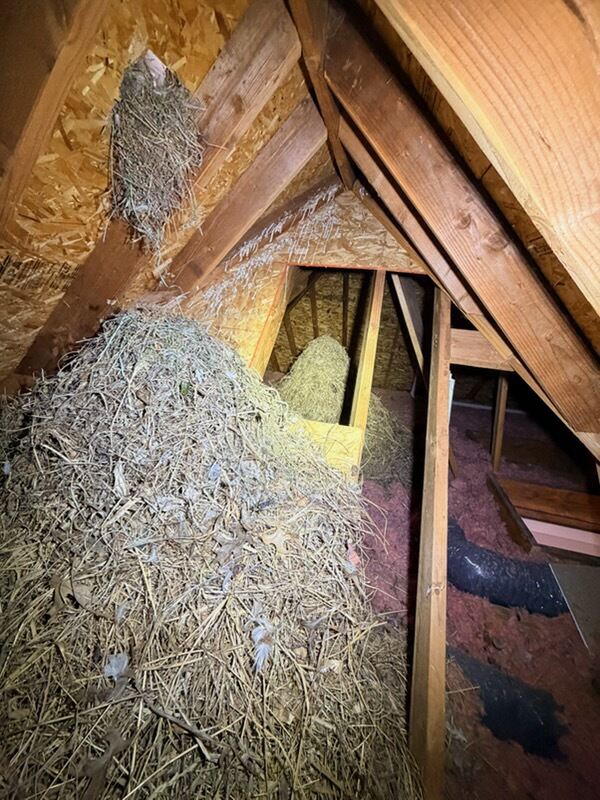
After birds, rodents, or other wildlife have been in an attic or crawlspace, the problem is not only the animals—it is the contaminated insulation, droppings, nesting material, and odor left behind. KC Pest Experts plans attic-focused cleanup and restoration work that prioritizes disinfecting, deodorizing, and returning the space to a safer, usable condition.
Why this matters
Disturbing or living above contaminated insulation and droppings is not only unpleasant—it can increase exposure to pathogens and dust from animal waste. Public health guidance from CDC and EPA highlights that animal waste and contaminated dust can increase exposure risks, including:
- Leptospirosis risk pathways associated with rodent urine contamination in water, soil, and surfaces
- Salmonellosis exposure from environments contaminated by animal droppings
- Tularemia risk pathways linked to infected wildlife contact and vectors in certain scenarios
- Histoplasmosis concern when bat or bird droppings are disturbed in enclosed spaces
Removing bulk contamination, then disinfecting and deodorizing treated areas, is how we reduce those risks before new insulation goes in.
Contaminant removal
We use specialized high-volume vacuum equipment and controlled removal methods to pull out contaminated insulation, feces, carcasses, and other debris from attics and crawlspaces. The goal is to strip away biohazard-laden material—not just surface clean around it—so sanitizers can reach framing and sheathing where pathogens and odor linger.
Sanitization and deodorizing
Urine and droppings can harbor bacteria and other hazards. After bulk removal, we apply EPA-registered disinfectants suited to the job, including multi-purpose products such as DSV (disinfectant, sanitizer, virucide) where appropriate, to help reduce pathogen risk on treated surfaces. Deodorizing treatments are paired with disinfection so lingering smells from urine and organic matter are addressed, not masked.
Exclusion before replacement
New insulation belongs in a sealed envelope. Before or alongside reinsulation, our team emphasizes exclusion: finding and sealing gaps, penetrations, and weak spots that allowed birds, rodents, or wildlife inside. That step is what keeps the next batch of pests from undoing the cleanup.
Insulation replacement
When contaminated material is removed, replacement insulation—often pest-resistant products where they fit the application—is installed to restore R-value and comfort. We align thickness and product choice with your structure and climate zone so performance matches what Kansas City seasons demand.
Health context references
- CDC leptospirosis guide
- CDC rodent infestation and disease risks
- CDC tularemia transmission routes
- CDC histoplasmosis and bat droppings risk
- EPA-registered disinfectants list
How this fits with wildlife control
Attic disinfectant and insulation cleanup is a natural follow-on to trapping, removal, and wildlife management. If animals are still active or entry points are open, we coordinate with Wildlife Control Services so the full sequence—remove the pest, remove the mess, disinfect and deodorize, seal, reinsulate—works as one plan.